
Pac-Man
Namco, 1980
The maze-chase blueprint and the most recognizable video game icon ever made; it remains among the highest-grossing arcade games of all time.
Insert coin. Settle the argument.
The maze-chase blueprint and the most recognizable video game icon ever made; it remains among the highest-grossing arcade games of all time.

Codified the modern one-on-one fighting game with special moves and combos, and single-handedly revived the arcade business in the early 1990s.
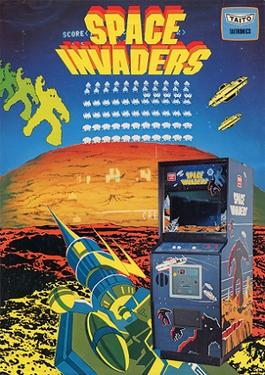
Launched the golden age of arcade games and was so popular in Japan it was rumored to cause a 100-yen coin shortage.
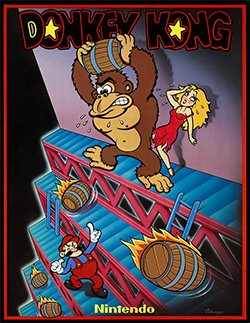
The birthplace of Mario (then 'Jumpman') and Shigeru Miyamoto's breakthrough, effectively inventing the platformer.
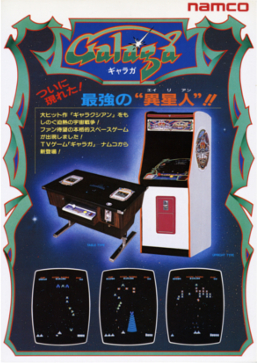
Perfected the fixed shooter with its dual-fighter capture-and-rescue mechanic; still a fixture of arcade cabinets four decades on.

Added four mazes and less predictable ghost AI, and became one of the best-selling arcade machines in U.S. history — many players rate it above the original.

Its digitized fighters and gory Fatalities made it a phenomenon and directly spurred the creation of the ESRB ratings board.
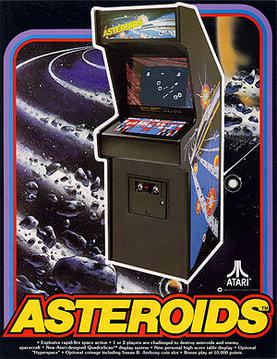
Atari's best-selling arcade game, whose crisp vector graphics and momentum-based physics defined the early era.

A tense, instantly readable crossing puzzle that became a cultural shorthand for arcade gaming itself.

A pioneering horizontal-scrolling shooter with a huge world and famously punishing difficulty and controls.

Co-designed by Donna Bailey, its trackball control and bright design made it one of the era's broadest crossover hits.

A clever digging-and-inflating strategy game that stood out from the shooter-heavy field and endures as a Namco staple.

Yu Suzuki's sprite-scaling Ferrari cruiser with branching routes, a licensed soundtrack, and a hydraulic moving cabinet raised the bar for arcade spectacle.
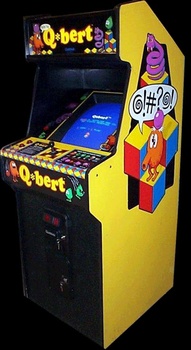
A charming isometric hopping puzzle with a memorable mascot, though its diagonal controls frustrated as many players as it delighted.

A tense trackball defense game steeped in Cold War dread, notable for a bleak design where you can only delay the inevitable.

Don Bluth's laserdisc animation was jaw-dropping, but the memorize-or-die reflex prompts are shallow and it cost double the usual quarter to play.

Smashing cities as giant monsters is a great premise, but the gameplay is repetitive across nearly identical levels and wears thin fast.

An early digitized-actor brawler widely panned for sluggish, imprecise controls and cheap, quarter-eating difficulty.
◆ Ranked on Tier Deck · browse all 296 lists · Privacy · Terms