
Polar bear
Arctic apex
The largest living land carnivore, with big males exceeding 3 meters and 600 kg, and the only bear that hunts warm-blooded prey as its main diet. A pure apex predator of the sea ice.
Every bear, weighed and judged.
The largest living land carnivore, with big males exceeding 3 meters and 600 kg, and the only bear that hunts warm-blooded prey as its main diet. A pure apex predator of the sea ice.

The most widely distributed bear on Earth, ranging across North America, Europe, and Asia. Its raw power and adaptability make it the definitional bear.

The North American brown bear population that became the symbol of untamed wilderness; the California grizzly appears on the state flag. Immense reputation for ferocity backed by real strength.
The largest brown bear subspecies, endemic to Alaska's Kodiak Archipelago, with the biggest individuals rivaling polar bears in mass. A true colossus.

A true bear whose diet is over 99% bamboo, and the black-and-white face that became the WWF logo and the global emblem of conservation. Unmatched charisma.

A Syrian brown bear adopted by Polish troops in WWII who was enlisted as a private and carried crates of artillery shells at the Battle of Monte Cassino in 1944. A genuine legend.
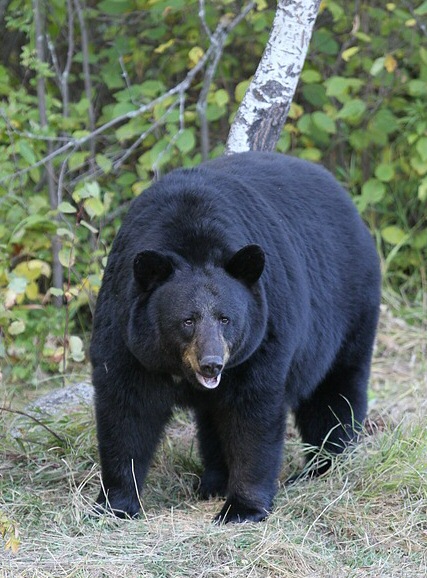
The most common bear in North America, with a population estimated at more than 600,000, thriving from forests to suburbs. Adaptable and enduring, if less imposing than its cousins.

The smallest bear species, weighing as little as 25 kg, with a golden chest patch and a tongue up to 25 cm long for extracting honey. Small but unmistakable.

The only bear native to South America and the inspiration for Paddington, named for the pale rings around its eyes. A shy, tree-climbing outlier of the family.

Known as the moon bear for the pale crescent on its chest, it is one of the most arboreal bears. Distinctive looks, though heavily threatened by the bile trade.

A shaggy Indian bear that evolved to suck up termites and ants through a gap in its front teeth. Its poor eyesight and nervous temperament make it one of the most dangerous bears to humans.

The U.S. Forest Service's wildfire-prevention mascot since 1944, later given a living namesake in a real cub rescued from a 1950 New Mexico fire. A cultural fixture, if not an actual species.

A hand-raised polar bear born at the Berlin Zoo in 2006 who became a global media sensation before dying young in 2011. Famous, beloved, and a bittersweet story.

A massive Ice Age bear whose bones fill European caves, extinct roughly 24,000 years ago during the Last Glacial Maximum. Impressive fossils, but it lost out to a changing climate and can't compete with the living.

The North American giant short-faced bear, among the largest carnivorous land mammals ever to live on the continent, extinct by around 12,800 years ago. Terrifying in life but gone from the world.

Named after a 1902 Theodore Roosevelt hunting anecdote, it is a stuffed toy — cuddly and beloved, but it has never hunted a seal or climbed a tree. Disqualified on the technicality of not being alive.
◆ Ranked on Tier Deck · browse all 296 lists · Privacy · Terms