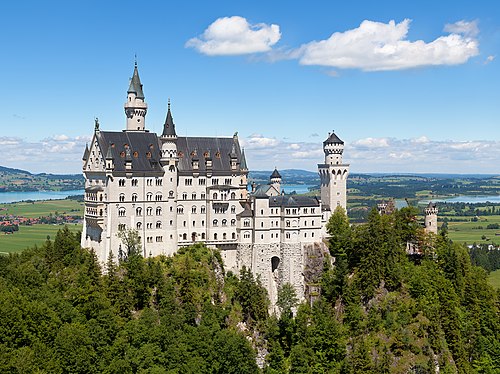
Neuschwanstein Castle
The fairy-tale icon
Ludwig II's 19th-century Bavarian fantasy inspired Disney's Sleeping Beauty Castle and draws roughly 1.4 million visitors a year, the most recognizable castle on Earth.
The world's greatest fortresses and fairy-tale strongholds, sorted by grandeur, history, and pure fame.
Ludwig II's 19th-century Bavarian fantasy inspired Disney's Sleeping Beauty Castle and draws roughly 1.4 million visitors a year, the most recognizable castle on Earth.
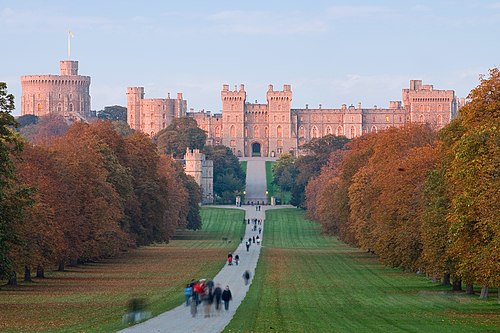
Founded by William the Conqueror around 1070, it is the world's oldest and largest continuously inhabited castle and an official residence of the British monarch.

Perched atop volcanic Castle Rock since at least the 12th century, it houses the Scottish Crown Jewels and is Scotland's most-visited paid attraction.

The finest surviving example of Japanese feudal castle architecture, a UNESCO World Heritage Site whose brilliant white walls earned it the nickname White Heron Castle.

Guinness-recognized as the largest ancient castle complex in the world at roughly 70,000 square meters, dating to the 9th century and seat of the Czech head of state.

The grandest château of the Loire Valley, begun in 1519 with 440 rooms and a famed double-helix staircase attributed to Leonardo da Vinci's influence.

A UNESCO-listed Nasrid palace-fortress in Granada, its intricate 13th-14th century Islamic geometry and stucco are among the finest surviving in the world.

Built by the Teutonic Knights from 1274, it is the largest castle in the world measured by land area and the biggest brick structure in Europe.

A fortified island abbey off Normandy that never fell during the Hundred Years' War, its dramatic tidal setting draws around 3 million visitors annually.

The neo-Gothic mountaintop seat of the Prussian royal house, rebuilt in the 1850s and often ranked among the most dramatically sited castles in Germany.

A UNESCO World Heritage fortress built by Edward I from 1283, its polygonal towers hosted the 1969 investiture of the Prince of Wales.
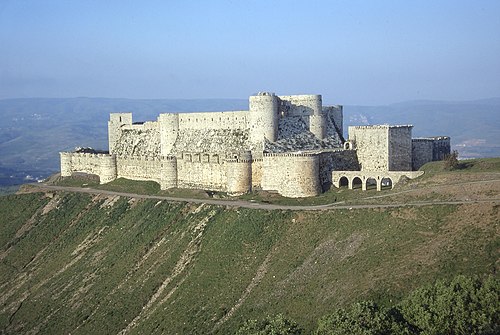
Called the finest preserved Crusader castle in the world, this Knights Hospitaller fortress in Syria withstood numerous sieges and is a UNESCO site.

Founded by William the Conqueror in 1068, its well-preserved motte-and-bailey and 14th-century additions make it one of England's premier castles.

The elegant Renaissance château spanning the River Cher, shaped by Diane de Poitiers and Catherine de' Medici, is France's most-visited château after Versailles.

A Renaissance fortress built into a cliff-cave mouth in Slovenia, Guinness-recognized as the largest cave castle in the world and a striking feat of siting.

A picturesque island castle at the meeting of three sea lochs, rebuilt in the early 20th century and among the most photographed landmarks in Scotland.
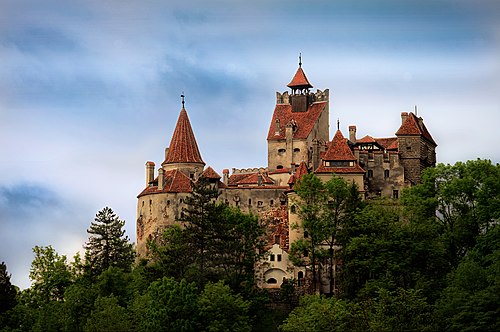
This 14th-century Transylvanian fortress is marketed worldwide as Dracula's Castle for its loose links to Bram Stoker's novel, making it Romania's top tourist castle.
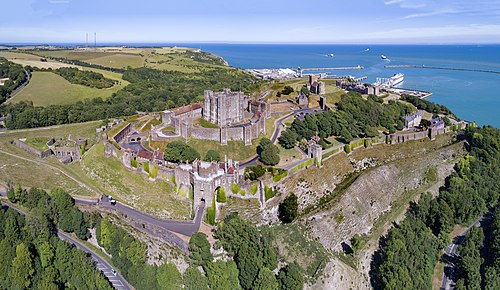
England's largest castle, called the Key of England for guarding the shortest Channel crossing, with fortifications used continuously from the 1180s through WWII.
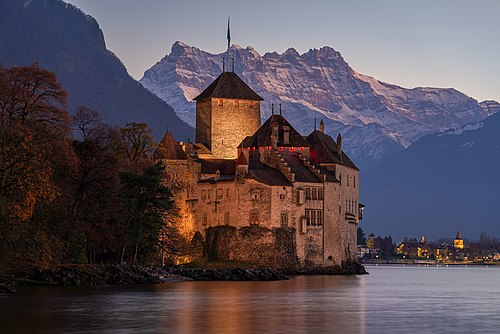
An island fortress on Lake Geneva immortalized by Byron's poem, Switzerland's most-visited historic building with roots reaching back over a thousand years.

Set on two islands in a lake in Kent, it served six medieval English queens and is often called the loveliest castle in the world.

A near-perfect 1385 moated quadrangular castle in East Sussex, its symmetrical silhouette makes it the classic image of a medieval English castle.
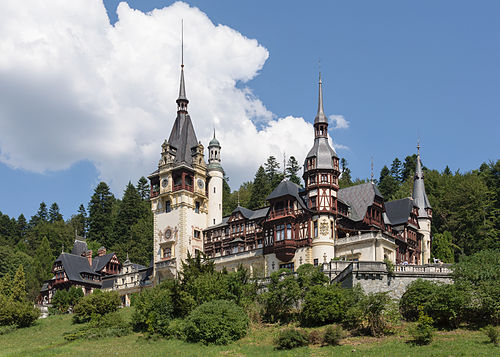
A lavish 1873-1914 Neo-Renaissance royal palace in the Romanian Carpathians, technically a modern castle but among Europe's most ornate 19th-century builds.

The Renaissance fortress in Helsingør, Denmark, immortalized as Elsinore in Shakespeare's Hamlet and now a UNESCO World Heritage Site.

One of the largest castles in Europe, this 15th-century Gothic-Renaissance fortress in Hunedoara is one of Romania's seven wonders.

A restored 14th-century Gothic island castle on Lake Galvė, the former seat of the Grand Dukes of Lithuania and the country's signature heritage site.

The largest Renaissance palace in Scandinavia, built for Christian IV in the early 1600s across three islets and home to Denmark's Museum of National History.

A 12th-century Norman castle remodeled in Victorian times, seat of the Butler dynasty for nearly 600 years and a centerpiece of Irish medieval heritage.
◆ Ranked on Tier Deck · browse all 296 lists · Privacy · Terms