
The Dark Knight
2008
At 94% on Rotten Tomatoes it is Nolan's highest-rated film, grossed roughly $1 billion, and earned Heath Ledger a posthumous Best Supporting Actor Oscar; routinely cited as the greatest superhero film ever made.
The auteur's filmography, sorted by awards, box office, and critical consensus.
At 94% on Rotten Tomatoes it is Nolan's highest-rated film, grossed roughly $1 billion, and earned Heath Ledger a posthumous Best Supporting Actor Oscar; routinely cited as the greatest superhero film ever made.

Won seven Academy Awards including Best Picture and Nolan's first Best Director, and grossed about $976 million — the biggest global earner to win Best Picture since The Return of the King in 2003.

Won four Oscars and grossed over $837 million; its 'dream heist' concept and ambiguous spinning-top ending became a defining pop-culture touchstone of the 2010s.
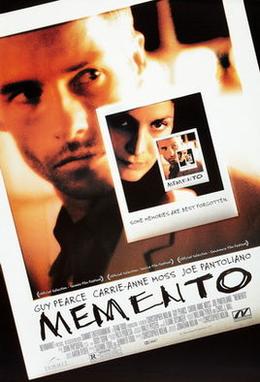
Nolan's breakout earned two Oscar nominations including Original Screenplay and was inducted into the Library of Congress National Film Registry; sits around 92% on Rotten Tomatoes.
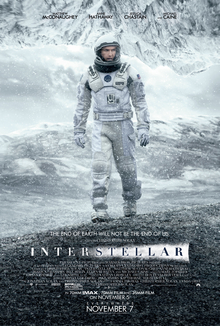
Won the Oscar for Best Visual Effects and grossed over $730 million, with a blockbuster 2024 IMAX re-release adding tens of millions more a decade later.

Won three Academy Awards (film editing, sound editing, sound mixing) from eight nominations and holds a 92% Rotten Tomatoes score, widely praised as a technical war-film landmark.

A twist-driven period thriller that has grown into a major cult favorite, frequently ranked among Nolan's best on fan and critic lists and nominated for two Oscars (cinematography and art direction).

Rebooted a dormant franchise and launched the acclaimed Dark Knight trilogy, grossing $206.9 million domestically and widely credited with legitimizing the modern grounded-superhero era.
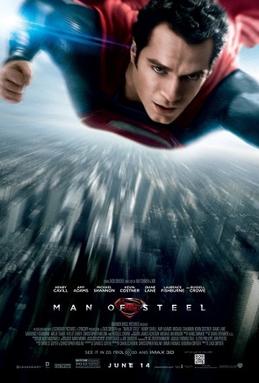
Nolan co-wrote the story with David S. Goyer and produced this Superman reboot, shaping its grounded, mythic tone. Ambitious and visually huge, but its heavier, joyless take and destruction-heavy finale divide fans, landing it mid-tier among his associated works.

Nolan directed, shot, and edited this eight-minute documentary short profiling the Quay Brothers' stop-motion studio. A rare, personal non-fiction piece revealing his craftsman's eye — small in scale but a genuine, distinctive Nolan directorial work.
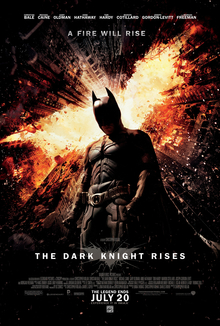
Grossed over $1.08 billion, yet at 87% on Rotten Tomatoes critical consensus treats it as the weakest chapter of the trilogy, with plot-logic complaints keeping it below its two predecessors.
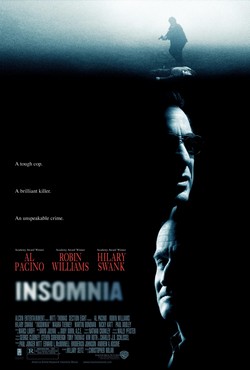
Holds a strong 92% critics' score with Pacino, Williams and Swank, but as the one film Nolan directed without a writing credit it remains one of his most under-seen, lower-profile works.

Nolan and Emma Thomas executive-produced the directorial debut of his longtime cinematographer Wally Pfister. A brainy AI premise with a strong cast, undercut by uneven pacing and a flat third act — a respectable but modest Nolan-adjacent effort.

Nolan's roughly $6,000 black-and-white debut holds 82% on Rotten Tomatoes and is respected by cinephiles as a promising calling card, but its micro-budget scale and obscurity place it low in overall consensus rankings.
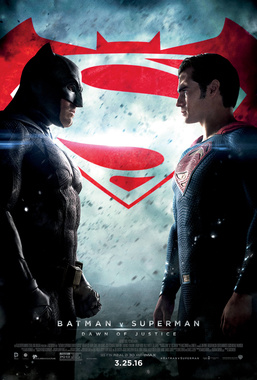
Nolan served as an advisory executive producer as the DC universe expanded beyond his Dark Knight trilogy. Visually striking but tonally muddled and overstuffed, it sits low among Nolan-linked films despite its box-office scale.

At 70% on Rotten Tomatoes it is Nolan's lowest-rated film; its inverted-time plot and famously muffled dialogue, plus a pandemic-crippled release, make it his most divisive and frustrating entry.
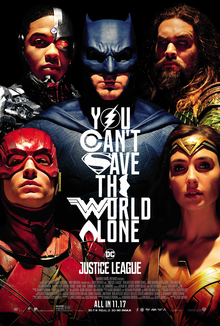
Nolan carried an executive producer credit on this troubled team-up, but the theatrical cut's reshoots, tonal whiplash, and infamous VFX make it the weakest entry attached to his name.
◆ Ranked on Tier Deck · browse all 296 lists · Privacy · Terms