
Titanic
The unsinkable that sank
Struck an iceberg and sank on 15 April 1912 with the loss of roughly 1,500 lives, becoming the most famous maritime disaster in history and the subject of the era's biggest films.
From the liner whose name means disaster to the wrecks preserved behind glass.
Struck an iceberg and sank on 15 April 1912 with the loss of roughly 1,500 lives, becoming the most famous maritime disaster in history and the subject of the era's biggest films.

Transported the Pilgrims to Plymouth in 1620, an event foundational to the founding narrative of the United States and commemorated every Thanksgiving.

Launched in 1797, she is the world's oldest commissioned warship still afloat; her cannonballs seemed to bounce off British ships in the War of 1812, earning the nickname "Old Ironsides."

Admiral Nelson's flagship at the decisive Battle of Trafalgar in 1805, she is the world's oldest commissioned warship and a preserved centerpiece of British naval heritage.

A Blue Riband-winning ocean liner of the 1930s that served as a WWII troopship nicknamed the "Grey Ghost," now permanently moored as a hotel in Long Beach.

Sunk by a German U-boat in 1915 with about 1,200 killed, including 128 Americans, an atrocity that helped turn US public opinion toward entering World War I.
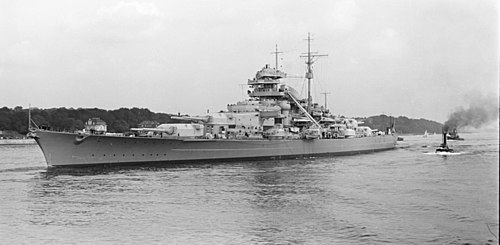
Germany's mightiest battleship sank the pride of the Royal Navy, HMS Hood, in 1941, then was hunted down and destroyed days later in one of WWII's most dramatic naval chases.

The largest of Columbus's three ships on the 1492 voyage that opened European contact with the Americas, before running aground off Hispaniola on Christmas Day.
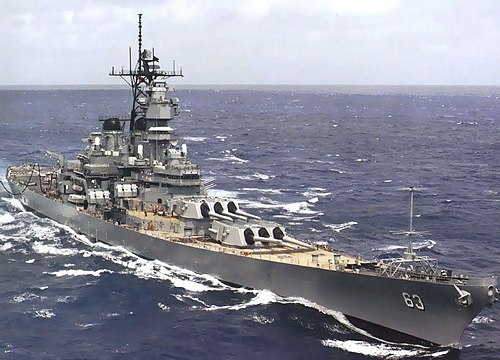
The Japanese Instrument of Surrender was signed on her deck on 2 September 1945, formally ending World War II, making "Mighty Mo" a monument of the 20th century.

Carried Charles Darwin on his 1831-36 survey voyage, whose observations led directly to the theory of evolution by natural selection.

Commissioned in 1961 as the world's first nuclear-powered aircraft carrier, the "Big E" served for over 50 years across the Cold War and beyond.

Sunk during the Japanese attack on Pearl Harbor on 7 December 1941 with over 1,100 crew lost; her submerged hull is a solemn US national memorial.

Built in 1869, she is one of the last surviving tea clippers and among the fastest sailing ships ever built, now preserved in dry dock at Greenwich.

Captain James Cook's ship on his first voyage (1768-71), which charted New Zealand and the east coast of Australia, reshaping the map of the Pacific.

Sir Francis Drake's galleon, the first English ship to circumnavigate the globe (1577-80), returning laden with Spanish treasure.

The famed Cunard flagship that sailed from 1969 to 2008, one of the last great transatlantic ocean liners and a floating symbol of the jet-age crossing.

A Swedish warship that capsized and sank in Stockholm harbor minutes into her 1628 maiden voyage; salvaged in 1961, she is now a remarkably intact museum ship.

A Tudor flagship that sank in 1545 during battle with the French; her raising in 1982 was a landmark of maritime archaeology, now displayed in Portsmouth.

Thor Heyerdahl's balsa raft that crossed 8,000 km of the Pacific in 1947 to test a migration theory, the basis of an Oscar-winning documentary.
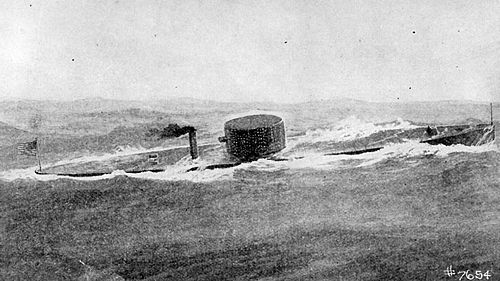
The Union ironclad whose 1862 clash with CSS Virginia at Hampton Roads was the first battle between ironclad warships, instantly making wooden navies obsolete.
◆ Ranked on Tier Deck · browse all 296 lists · Privacy · Terms