
Diamond
The undisputed king
The hardest known natural material at 10 on the Mohs scale, prized for the brilliance of its exceptionally high refractive index; 20th-century De Beers marketing cemented it as the default Western engagement stone.
Nature's showcase, sorted by rarity, durability, and what collectors actually pay.
The hardest known natural material at 10 on the Mohs scale, prized for the brilliance of its exceptionally high refractive index; 20th-century De Beers marketing cemented it as the default Western engagement stone.

A 9 on the Mohs scale; the finest 'pigeon's blood' Burmese rubies are the most valuable colored gemstone per carat, with top stones outselling most diamonds at auction.

The premier green beryl, so prized that top Colombian stones can command higher prices than diamonds despite their near-universal inclusions (the 'jardin').

The blue variety of corundum, hard at 9 and famously durable; Kashmir sapphires are among the most valuable colored gems on Earth.

A rare chrysoberyl that shifts from green in daylight to red under incandescent light, making fine specimens extraordinarily scarce and pricey.

Found only in the Merelani Hills near Mount Kilimanjaro in Tanzania; its violet-blue glow (usually heat-enhanced) and single-source rarity made it a modern jewelry sensation after its 1967 discovery.

Prized for its play-of-color that flashes the full spectrum; Australian black opals are among the most sought-after gems worldwide.

The blue-green cousin of emerald, valued for its clarity and calming color and often available in large, remarkably flawless crystals.

Revered for millennia in China; top imperial green jadeite fetches millions, though the tougher nephrite form of jade is far more common.
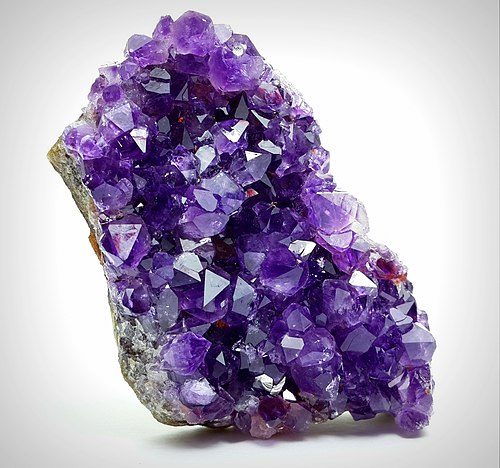
Once counted among the cardinal gems alongside ruby and sapphire, but large Brazilian and Uruguayan deposits made this purple quartz affordable and abundant.

Hard at 8 on the Mohs scale and available in many colors; prized imperial topaz is rare, but blue topaz is almost always irradiated and heat-treated, and cheap.

A durable silicate best known in deep red; rarer green demantoid and tsavorite varieties are genuinely prized, while common almandine is a bargain.

One of the few gems produced by a living creature, timelessly elegant but soft at 2.5-4.5 Mohs and now mostly cultured rather than wild.

A pleasant lime-green stone formed deep in the mantle (and even found in meteorites), but its limited color range and modest hardness keep it mid-tier.

Beloved in Native American and Persian jewelry, but soft, porous, and so often stabilized or dyed that untreated stones are hard to find.

A cheerful yellow quartz, but most on the market is just heat-treated amethyst rather than naturally occurring citrine.

A banded chalcedony popular for cameos and men's rings, though commercial black onyx is routinely dyed to deepen its color.
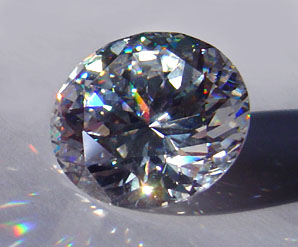
A synthetic material developed by Soviet scientists in the 1970s and mass-produced as a diamond simulant; it has no natural rarity and sells for a tiny fraction of diamond's price.

Really just polished iron oxide with a metallic sheen; it has none of the rarity of a fine gem, and the 'magnetic' healing-stone versions are actually synthetic hematine, not true hematite.
◆ Ranked on Tier Deck · browse all 296 lists · Privacy · Terms