← All tier lists

Historical Empires, Ranked

Every empire wanted to last forever. We graded on a curve.

Ranked on peak territory and population, staying power, cultural and institutional legacy, and how they're remembered — with the genuinely monstrous sent to the bottom.
✦ Disagree? Make your own →
S
Roman Empire
Roman Empire
The template every empire copied

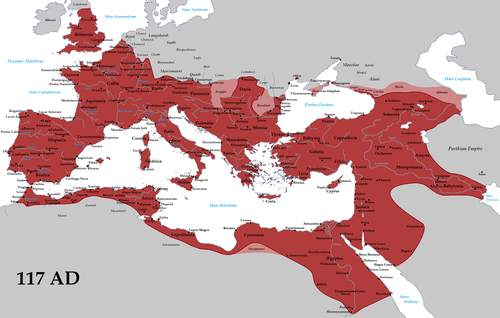
Dominated the Mediterranean for centuries, peaking around 5 million km² under Trajan, and exported roads, law, Latin and republican-imperial governance that still shape the West. Its very name became the word for 'empire.'

Mongol Empire
Mongol Empire
Largest contiguous land empire ever

At its height it stretched roughly 24 million km² from Korea to Eastern Europe, the largest connected land empire in history. It reopened Silk Road trade across Eurasia in a single generation of conquest.

British Empire
British Empire
The sun literally never set

By 1920 it covered about 35.5 million km² and ruled nearly a quarter of the world's population, the largest empire in history by area. English, common law and global trade networks are its lasting fingerprints.

A
Achaemenid Empire
Achaemenid Empire
The first true world empire

Cyrus and Darius built the first empire to span three continents, ruling an estimated 44% of the world's population around 480 BC — the highest share any empire has ever held. It pioneered satrapies, royal roads and imperial tolerance.

Han Dynasty
Han Dynasty
China's four-century golden age

Contemporary and comparable in scale to Rome, it standardized Chinese bureaucracy, gave the majority ethnic group its name, and oversaw the invention of paper and the opening of the Silk Road. Confucian statecraft here set the mold for two millennia.

Ottoman Empire
Ottoman Empire
Six centuries astride three continents

Lasting from 1299 to 1922, it took Constantinople in 1453 and controlled southeastern Europe, the Middle East and North Africa at its peak. Few empires matched its longevity or its role as a bridge between Europe and Asia.

Byzantine Empire
Byzantine Empire
Rome that refused to die

The eastern Roman Empire survived nearly a thousand years past the West, falling only in 1453, and preserved Greco-Roman learning and Justinian's codified law through the Middle Ages. Its diplomacy and Orthodox Christianity reshaped Eastern Europe.

B
Abbasid Caliphate
Abbasid Caliphate
Baghdad's House of Wisdom

Presiding over the Islamic Golden Age, it made Baghdad a global center of science, medicine and translation that preserved and advanced Greek and Indian knowledge. Its scholars propagated the decimal system and algebra to the wider world.

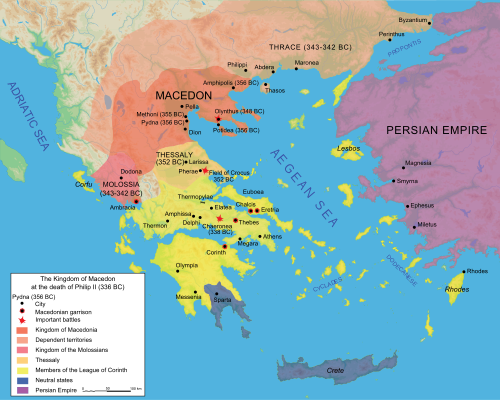
Macedonia (Alexander's Empire)
Conquered a world, then shattered

Alexander the Great marched from Greece to the Indus and was never defeated in a pitched battle, spreading Hellenistic culture across the known world. But he built no succession, and the empire fractured among his generals within years of his death in 323 BC.

Spanish Empire
Spanish Empire
The first truly global empire

The 16th-century conquest of the Americas gave Spain the first empire spanning the globe, funded by vast New World silver and spreading Spanish across two continents. That wealth also fueled colonial brutality and the collapse of native civilizations.

Mughal Empire
Mughal Empire
The empire that built the Taj Mahal

At its height it ruled most of the Indian subcontinent and commanded roughly a quarter of the world's economy. It left extraordinary architecture, from the Taj Mahal to the Red Fort, and a lasting Indo-Persian cultural synthesis.

C
Russian Empire
Russian Empire
Third-biggest empire in history

By area it grew to about 22.8 million km², the third-largest empire ever, spanning Eastern Europe to the Pacific. But it rested on serfdom until 1861 and buckled into revolution in 1917.

Inca Empire
Inca Empire
Master engineers of the Andes

The largest empire in pre-Columbian America, it stitched together the Andes with tens of thousands of kilometers of road and terraced agriculture without the wheel or writing. It was toppled by fewer than 200 Spaniards exploiting a civil war in the 1530s.

Aztec Empire
Aztec Empire
Tenochtitlan, the island metropolis

Its capital Tenochtitlan was one of the largest cities in the world, built on an engineered lake with causeways and floating gardens. The empire fell fast to Cortés and his indigenous allies in 1521, aided by smallpox.

Gupta Empire
Gupta Empire
India's classical golden age

The Gupta era saw major advances in mathematics and astronomy, including the early use of zero and the decimal place-value system. Its art, Sanskrit literature and science defined a classical high point for the subcontinent.

Carthaginian Empire
Carthaginian Empire
Rome's greatest rival, erased

A Phoenician maritime power that dominated the western Mediterranean and produced Hannibal, who nearly broke Rome by marching elephants over the Alps. It lost the Punic Wars so completely that Rome razed the city in 146 BC.

D
Empire of Japan
Empire of Japan
Modernized fast, expanded brutally

It industrialized in a generation and briefly controlled much of East Asia and the Pacific, but its 1930s–40s expansion brought atrocities like Nanjing and the exploitation of occupied peoples. It ended in unconditional surrender in 1945.

F
Nazi Germany
Nazi Germany
The 'Thousand-Year Reich' lasted 12

A regime built on genocide, it murdered six million Jews in the Holocaust and plunged the world into its deadliest war. Its self-proclaimed thousand-year empire collapsed in ruins after barely twelve years.

◆ Ranked on Tier Deck · browse all 296 lists · Privacy · Terms