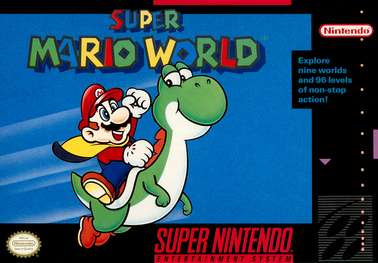
Super Mario World
SNES, 1990
A Super Famicom launch title that introduced Yoshi and a sprawling secret-laden overworld with Star Road and 96 total exits. Widely regarded as the peak of 2D Mario design.
Every mainline Mario platformer plus the spin-offs that mattered, ranked on design, influence, and staying power.
A Super Famicom launch title that introduced Yoshi and a sprawling secret-laden overworld with Star Road and 96 total exits. Widely regarded as the peak of 2D Mario design.

An N64 launch title that defined the 3D platformer with its analog free-roam movement; earlier 3D platformers existed, but this set the template for a generation. Its camera and level design shaped the genre for years.
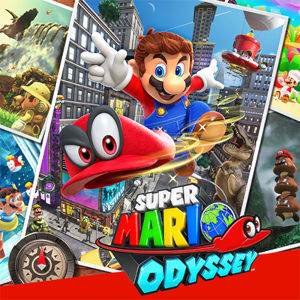
Cappy's capture mechanic lets Mario possess enemies and objects across dense sandbox kingdoms holding 880 unique Power Moons. A critical darling that has sold over 28 million copies.

Spherical gravity-bending planetoids paired with a full orchestral score redefined 3D platforming. Its 97 Metacritic ranks among the highest scores of any game.

The Tanooki suit, world map, and power-up variety made it the definitive NES platformer. A landmark that anchored the whole franchise's identity.
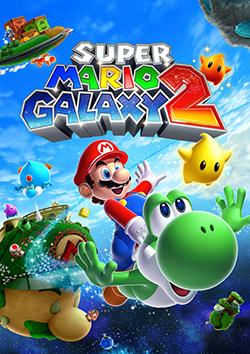
Doubled down on inventive one-off gravity gimmicks and added rideable Yoshi with power-up berries. Arguably a tighter, more concentrated challenge than the original.

Founded the entire kart-racing genre with drifting, items, and split-screen battle mode. Its influence stretches far beyond Nintendo.

Anti-gravity tracks and a massive roster made it the best-selling Mario Kart ever, topping 60 million copies. A near-permanent fixture in Switch libraries.

The game that helped revive the home console market after the 1983 crash and set the grammar for side-scrolling platformers. Historically indispensable even if later entries refined the formula.

Its hand-drawn crayon art and egg-throwing mechanics broke the Mario mold entirely. A bold, beautiful title starring Yoshi with baby Mario in tow.

Four-player co-op and the Cat Suit made this the strongest of the linear 3D Marios. The 2021 Switch re-release added the compact open-world bonus adventure Bowser's Fury.

Wonder Flowers warp levels into surreal set-pieces, reinventing 2D Mario after roughly a decade of the safe New Super Mario Bros. formula. A fresh critical hit.

Turn-based combat staged before a reactive theater audience, plus sharp writing, made it a cult favorite. Its 2024 Switch remake proved its enduring appeal.

A Square-developed RPG that introduced timed-hit action commands and laid the groundwork for both Paper Mario and Mario & Luigi. A charming genre detour.

FLUDD's water-jet traversal and a tropical setting gave it personality, but finicky blue-coin hunts and divisive design split fans. A flawed but memorable experiment.
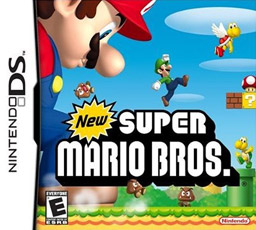
Revived 2D Mario platforming for a new era and sold enormously well. Solid but visually generic, kicking off a formula that would grow stale.

The board-game-plus-minigames party staple that spawned a decades-long series. Iconic, though its rotational analog-stick minigames were blamed for hand injuries, prompting Nintendo to offer protective gloves.

A ghost-vacuuming GameCube launch title that put Luigi in the spotlight. Short but atmospheric, it seeded a beloved spin-off series.

Built largely around coin-collecting gimmickry with little new to offer. One of the most forgettable and formulaic entries in the New series.

An edutainment game where Luigi answers geography trivia while Mario is captured. Sluggish and dull, it's a notorious low point for the brand.

A door-closing puzzle game on the Philips CD-i with infamous, poorly animated cutscenes. Widely cited as one of the worst Mario games ever made.
◆ Ranked on Tier Deck · browse all 296 lists · Privacy · Terms