
Dragon
The undisputed apex
Appears independently across Europe, China, and the Middle East, making it the most widespread legendary beast on Earth. From Beowulf to Chinese imperial symbolism, no creature has more cultural reach or firepower.
Beasts of legend, sorted by sheer mythological clout.
Appears independently across Europe, China, and the Middle East, making it the most widespread legendary beast on Earth. From Beowulf to Chinese imperial symbolism, no creature has more cultural reach or firepower.

The firebird that cyclically regenerates from its own ashes, best documented in Greek sources with analogs in Egyptian, Persian, and Chinese traditions. Its resurrection symbolism made it a near-universal emblem of renewal.

Combining the king of beasts and the king of birds, the griffin guarded gold in Greek and Central Asian lore. Its imagery stretches back over 5,000 years to ancient Egypt and Mesopotamia, later becoming a favorite heraldic power symbol.

The colossal Scandinavian sea monster that drags entire vessels beneath the waves, likely inspired by real giant squid sightings. It remains the definitive nightmare of the open ocean.

The single-horned horse whose alicorn was believed to neutralize poison, driving a lucrative medieval trade in fake narwhal-tusk horns. Few creatures are more instantly recognizable worldwide.

The bull-headed monster imprisoned in the Cretan Labyrinth and slain by Theseus, one of Greek mythology's most enduring tragic villains. Its maze became the archetype the very word 'labyrinth' now conjures.

The snake-haired Gorgon whose gaze turned onlookers to stone until Perseus beheaded her using a mirrored shield. Her severed head became a protective emblem across the ancient Mediterranean.

The multi-headed hound of Hades who ensured no soul escaped the underworld, famously subdued by Heracles in his final labor. A blueprint for guardian-beast myths ever since.

The Japanese fox spirit that grows additional tails and shapeshifting powers with age, capable of great wisdom or cunning deception. A cornerstone of East Asian folklore and modern pop culture.

The winged stallion born from Medusa's blood who carried heroes and was later honored as a constellation. He set the template for every majestic flying steed to follow.

The human-to-wolf shapeshifter whose legends span from ancient Greece to medieval European witch trials. It anchors an entire genre of horror to this day.
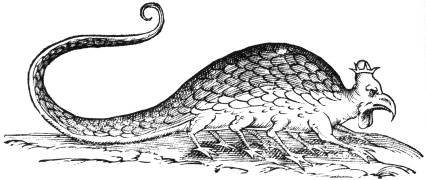
The venomous 'king of serpents' said to kill with a single glance and whose breath withered vegetation. Pliny the Elder documented it in the first century AD.

The fire-breathing hybrid of lion, goat, and serpent slain by Bellerophon riding Pegasus. Its name is now the scientific term for a single organism made of genetically distinct tissues.

The ape-like 'Abominable Snowman' of Himalayan folklore, reported by Sherpas and mountaineers for centuries. Repeated expeditions have never produced hard evidence.
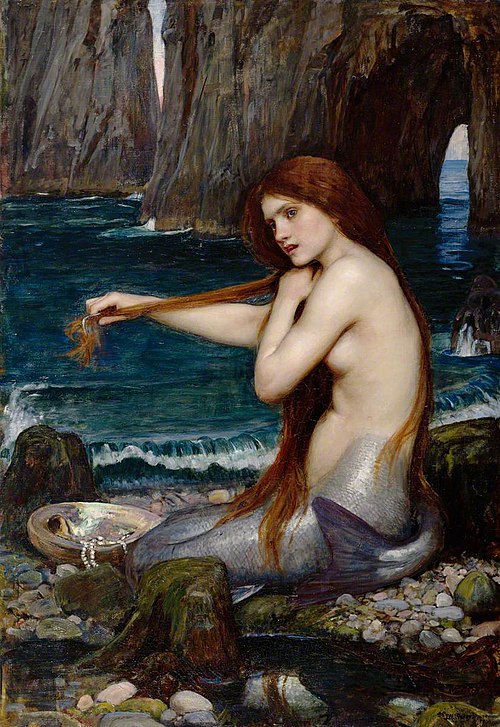
The aquatic half-human found from Assyrian myth to Andersen's fairy tales, often luring sailors to their doom. Columbus himself claimed to have sighted them.

The horse-bodied men of Greek myth, usually depicted as wild and drunken except for the wise Chiron. A durable fantasy staple, if rarely the main event.

The one-eyed giant Polyphemus was famously blinded and outwitted by Odysseus with a sharpened stake. Memorable, but mostly known for losing.

The small earth-dwelling spirit of Renaissance alchemy, later reduced to a garden statue and a search-engine mascot joke. Diminished from myth to kitsch.

The American 'horned rabbit' is a 1930s Wyoming hoax invented by taxidermists grafting antlers onto jackrabbits. Older horned-hare folklore exists, but this pop-culture icon has no ancient roots of its own.
◆ Ranked on Tier Deck · browse all 296 lists · Privacy · Terms