Established in 1872 as the world's first national park, it holds roughly half of Earth's geysers including Old Faithful and sits atop a massive volcanic caldera. Wolves, bison, and grizzlies roam a landscape unlike anywhere else.
Sacred ground, tourist traps, and one glorified parking lot.
Established in 1872 as the world's first national park, it holds roughly half of Earth's geysers including Old Faithful and sits atop a massive volcanic caldera. Wolves, bison, and grizzlies roam a landscape unlike anywhere else.
Home to El Capitan and Half Dome, two of the most iconic granite monoliths on the planet, plus some of North America's tallest waterfalls. Its glacier-carved valley helped launch the entire American conservation movement under John Muir.
The Colorado River carved a canyon up to a mile deep and 277 river miles long, exposing nearly two billion years of geologic history in its walls. It draws well over four million visitors a year and remains genuinely jaw-dropping.
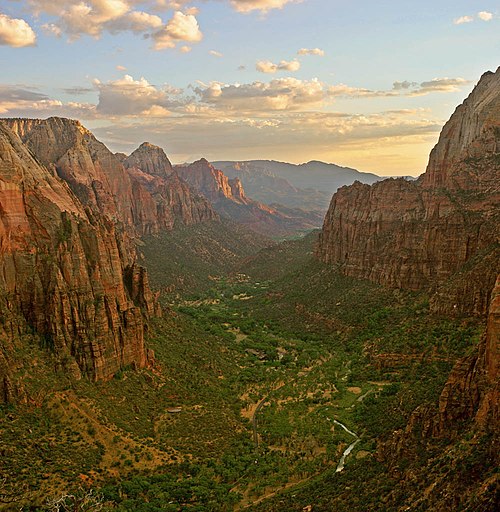
Towering Navajo sandstone cliffs and slot-canyon hikes like The Narrows and Angels Landing make it one of the most visited and dramatic parks in the country. Angels Landing is so popular it now requires a permit lottery.
Over a million acres of glacier-sculpted peaks, alpine lakes, and the engineering marvel of the Going-to-the-Sun Road. Its namesake glaciers have shrunk dramatically, making it a stark front line of climate change.
Centered on 20,310-foot Denali, the highest mountain in North America, it protects six million acres of subarctic wilderness with grizzlies, caribou, and wolves. A single 92-mile road is the only way in, keeping it wild.
The Teton Range juts abruptly over 7,000 feet above the Jackson Hole valley floor with no foothills, creating one of the most photographed skylines in America. Glacial lakes and the Snake River complete the postcard.
A UNESCO World Heritage Site spanning temperate rainforest, glaciated peaks, and rugged Pacific shoreline within a single park. The Hoh Rain Forest receives up to 14 feet of rain a year.
With over 13 million annual visitors it is by far the most visited U.S. national park, prized for misty ridgelines and extraordinary biodiversity. The crowds and traffic are the cost of that popularity.
Concentrates over 2,000 natural sandstone arches, including the iconic Delicate Arch featured on Utah's license plate. It's spectacular but small and now uses timed-entry reservations to manage overcrowding.
Protects giant sequoias including General Sherman, the largest tree on Earth by volume, and California's Mount Whitney. The scale of the trees alone earns its keep.
The crown jewel of the New England coast, with Cadillac Mountain being among the first spots in the U.S. to catch the sunrise. Compact and stunning, though it gets packed in summer.
Not a true canyon but a series of natural amphitheaters filled with the largest concentration of hoodoos, thin rock spires, found anywhere on Earth. Its dark skies also make it a premier stargazing spot.
Trail Ridge Road climbs above 12,000 feet, giving easy access to alpine tundra and 60-plus peaks over 12,000 feet. Gorgeous, but so crowded it required timed-entry permits for peak months.
Sits at the meeting of the Mojave and Colorado deserts, defined by its twisted namesake trees and world-class boulder climbing. Otherworldly, though relatively flat and hot much of the year.
Contains Badwater Basin at 282 feet below sea level and recorded 134°F, the hottest reliably measured air temperature on Earth. A place of extremes worth seeing once, if you can handle it.
The largest tropical wilderness in the U.S. and the only place where alligators and crocodiles coexist. Its ecosystem is heavily degraded by water diversion and invasive Burmese pythons, dimming the experience.
One of the smallest and most urban national parks, centered on historic bathhouses in downtown Hot Springs, Arkansas. Charming, but it feels more like a spa town than a great wilderness.
A green corridor between Cleveland and Akron built around a scenic railroad and waterfall, frequently cited by critics as not meeting the grandeur bar of a national park. Nice for a day trip; hard to call a crown jewel.
At just 91 acres it is the smallest national park by far, and it's essentially a stainless-steel arch and museum in downtown St. Louis. Its 2018 rebranding from national monument to national park is widely mocked as a status upgrade it doesn't earn.
◆ Ranked on Tier Deck · browse all 296 lists · Privacy · Terms