Android
Most-used OS on Earth
Runs on over three billion active devices and holds roughly 70% of the global smartphone market, making it the most widely used operating system in the world since its 2008 launch.
The software running three billion phones down to the platforms history forgot.
Runs on over three billion active devices and holds roughly 70% of the global smartphone market, making it the most widely used operating system in the world since its 2008 launch.
Dominates desktop and laptop computing with around 70% market share and has since the 1990s, putting a graphical PC on billions of desks and building Microsoft into a trillion-dollar company.
Debuting with the iPhone in 2007, it reinvented mobile computing around multi-touch and the App Store, driving one of the largest software economies ever and the most profitable phone business.

Runs the overwhelming majority of web servers and cloud infrastructure and 100% of the world's top 500 supercomputers; its kernel also underpins Android. Created by Linus Torvalds in 1991.

A Unix-based OS since OS X in 2001, it is the platform of choice for designers, developers and video professionals, prized for its polish and tight hardware-software integration.

Born at Bell Labs in 1969, Unix and its design philosophy are the direct forebears of macOS, Linux and BSD, shaping virtually every serious operating system that followed.

Shipped on the 1981 IBM PC, MS-DOS became the command-line standard of early personal computing and the launchpad from which Microsoft built the Windows empire.

Its 1995 launch was a cultural event, introducing the Start menu, taskbar and plug-and-play that defined the PC interface for the next 25 years.

Released in 2001, XP became one of the most popular and long-lived operating systems ever, so trusted that many users clung to it well past its 2014 end-of-support.

Widely regarded as the best Windows release, its 2009 arrival restored confidence after Vista and it held huge market share for over a decade.

Google's lightweight, browser-centric OS dominates US K-12 education, where Chromebooks became the top-selling computing device thanks to low cost and easy management.
Launched in 2004, it made desktop Linux approachable and remains the most popular distribution, a mainstay on developer machines and cloud servers alike.

Released in 2015 and reaching well over a billion active devices, it unified Microsoft's platform and served as the desktop mainstream for most of the last decade.

Split from iOS in 2019 to power the iPad with desktop-class multitasking, cementing Apple's commanding lead in the premium tablet market.

Introduced in 2015, it runs the Apple Watch, the best-selling smartwatch line in the world, and pioneered mainstream wrist-based health and fitness tracking.

Powered the majority of smartphones in the mid-2000s, mostly on Nokia handsets, but the iPhone and Android rendered it obsolete and it was discontinued.

Ruled the corporate world of the 2000s with secure push email and its iconic keyboard, before touchscreens swept the platform into irrelevance.
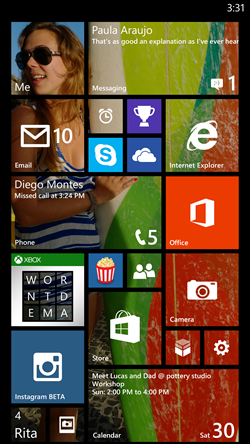
Launched in 2010 with a striking Metro tile interface but never cracked meaningful market share; Microsoft abandoned it entirely by 2017.
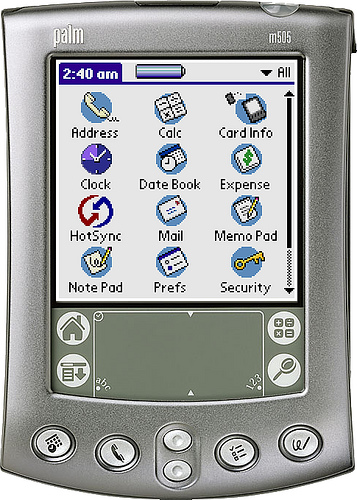
Defined the handheld PDA of the late 1990s and popularized the pocket organizer, but failed to survive the transition to modern smartphones.
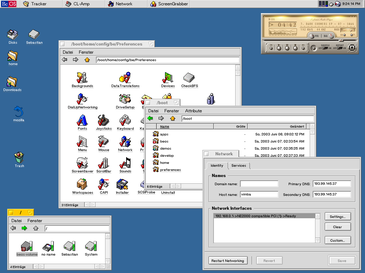
A technically brilliant 1990s multimedia OS praised for its speed and design, but it found no market and was discontinued, surviving only as the open-source Haiku.
◆ Ranked on Tier Deck · browse all 296 lists · Privacy · Terms