
Earth
Terrestrial / our home
The only known body in the universe confirmed to host life and liquid surface water, and the only planet not named after a Greco-Roman deity — an uncontested benchmark for planetary science.
Consensus by science, spectacle, and public affection — Earth still undefeated at hosting life.
The only known body in the universe confirmed to host life and liquid surface water, and the only planet not named after a Greco-Roman deity — an uncontested benchmark for planetary science.

Its ring system is the most extensive and visually iconic in the solar system, and Saturn has topped YouGov's American favorite-planet poll (17%), a perennial public favorite.

The most-explored other world, with active rovers Curiosity and Perseverance plus Ingenuity's first powered flight on another planet, and consistently a top-two favorite planet in YouGov polling.
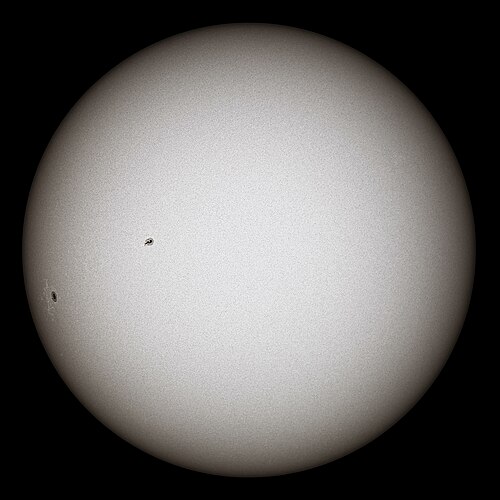
Not technically a planet, but it's the gravitational anchor of the entire solar system holding every planet in orbit. Without it there is no ranking to have. Provides all the light and heat that makes life possible. An easy S if we're bending the 'planet' rules at all.

The largest and most massive planet — over 2.5 times the mass of all other planets combined — and home to the Great Red Spot, a storm wider than Earth that has raged for centuries.

The brightest natural object in the night sky after the Moon and Sun, and the first planet ever visited by a spacecraft (Mariner 2, 1962), a landmark in exploration history.

Saturn's largest moon and the second-largest moon in the solar system, bigger than the planet Mercury. It has a thick nitrogen atmosphere and stable surface liquids (methane lakes and rivers), making it one of the most Earth-like and genuinely fascinating worlds we know of.

Jupiter's icy moon hides a vast subsurface saltwater ocean beneath its cracked crust, holding possibly twice the water of all Earth's oceans combined. It's one of the top candidates for extraterrestrial life in the solar system, which earns it a strong A.

The first planet discovered by mathematical prediction rather than direct observation (1846) and host to the fastest sustained winds in the solar system, exceeding 2,000 km/h.

The smallest planet and closest to the Sun, completing an orbit in just 88 days — fastest among the eight — and the second-densest planet after Earth.

The largest moon in the entire solar system, larger than Mercury, and the only moon known to generate its own magnetic field. It likely harbors a subsurface ocean too. Impressive credentials, but as a satellite it lands solidly in B.

The first planet found with a telescope (1781) and the least-visited, receiving only a single flyby by Voyager 2 in 1986; it uniquely rotates on its side at a ~98-degree axial tilt.
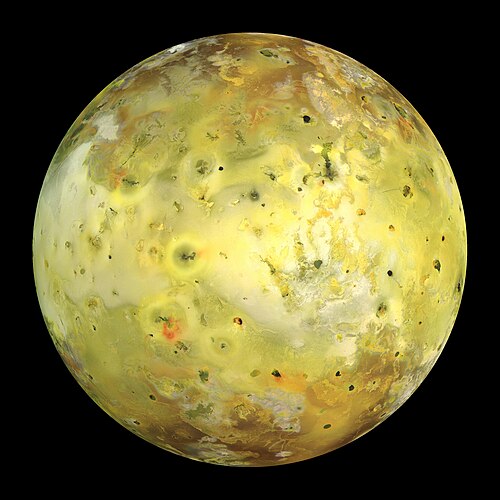
Jupiter's innermost large moon is the most volcanically active body in the solar system, with hundreds of erupting volcanoes constantly resurfacing it. Spectacular to look at, but it's a hellish sulfur-covered wasteland ravaged by radiation. Cool factor lands it in C.

The largest object in the asteroid belt and the first dwarf planet visited by a spacecraft (Dawn, 2015), yet it was reclassified from planet to asteroid within decades of its 1801 discovery.

A dwarf planet in the Kuiper Belt, one of the largest known trans-Neptunian objects. It's genuinely a recognized dwarf planet, but it's small, distant, frozen, and lacks the notability of the bigger names. A respectable but forgettable D.

Officially reclassified as a dwarf planet by the IAU in 2006 for failing to clear its orbital neighborhood — the most notorious demotion in astronomy — though New Horizons' 2015 flyby made it a beloved fan favorite anyway.

The discovery of this scattered-disc dwarf planet in 2005, comparable in size to Pluto, directly triggered the IAU debate that reclassified Pluto — fittingly named after the goddess of discord.
◆ Ranked on Tier Deck · browse all 296 lists · Privacy · Terms