
Tetris
The perfect game
Created by Alexey Pajitnov in 1984, it is the best-selling video game franchise ever, with over 520 million copies sold as of December 2024. Seven pieces, one rule, endless depth — the platonic ideal of the puzzle game.
Falling blocks, folding worlds, and the tiles that ate your commute.
Created by Alexey Pajitnov in 1984, it is the best-selling video game franchise ever, with over 520 million copies sold as of December 2024. Seven pieces, one rule, endless depth — the platonic ideal of the puzzle game.
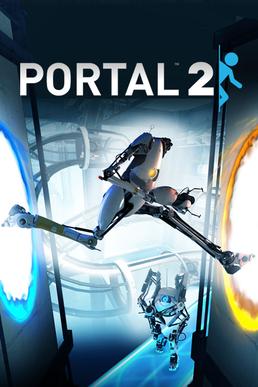
Valve's 2011 sequel holds a Metacritic score of 95 and is frequently cited among the greatest games ever made. Its two-player co-op campaign is a masterclass in escalating spatial puzzles.

Tetsuya Mizuguchi's studio Enhance reinvented the classic in 2018, fusing the ruleset with reactive music and visuals across dozens of evolving stages. It turns a 1984 formula into a synesthetic, near-transcendent experience.

Released in 2007 as part of The Orange Box, it introduced GLaDOS, the Companion Cube, and a mechanic so novel it spawned its own subgenre. A tight, near-flawless few hours that punched far above its length.

Arvi Teikari's 2019 game lets you push the words that define the rules themselves, so 'Wall Is Stop' can become 'Wall Is Win.' Its radical design won IGF Excellence in Design and the Game Developers Choice Best Design award.

Jonathan Blow's 2016 open-world island teaches its entire visual language through its roughly 650 puzzles, without a single word of instruction. Its escalating panel logic is one of gaming's finest self-taught systems.

Lucas Pope's 2018 mystery uses a 1-bit art style and a magic pocket watch to have you identify the fate of all 60 souls on a ghost ship. It reinvented the deduction puzzle around pure inference.
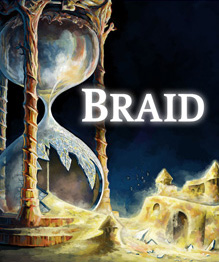
Jonathan Blow's 2008 debut built each world around a different manipulation of time, from full rewinds to time-linked shadows. It was a landmark for the indie movement and puzzle-platformer design.
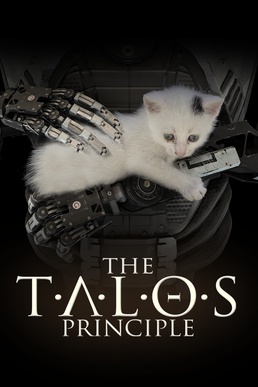
Croteam's 2014 first-person game wraps laser-and-jammer puzzles in a story about consciousness and free will. Smart, generous puzzle design paired with genuinely thoughtful writing.
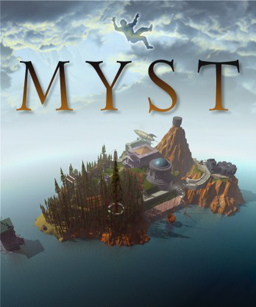
The 1993 Cyan classic was the best-selling PC game of the 1990s until The Sims overtook it in 2002. Its pre-rendered worlds and obtuse, atmospheric puzzles defined an entire era of adventure gaming.

ustwo's 2014 mobile game turns impossible M. C. Escher geometry into rotatable, playable architecture. A short, gorgeous experience that proved touchscreens could deliver artful puzzles.
Mizuguchi's 2004 PSP launch title synced block-clearing to a sweeping timeline bar driven by music. A stylish, rhythmic take on the falling-block formula that became a handheld favorite.
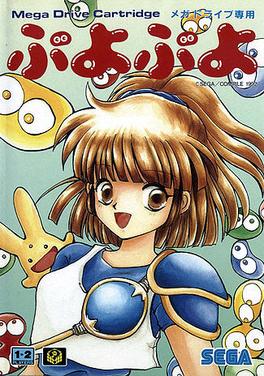
Compile's colorful match-four series, born in 1991 and Sega-owned since 1998, is built around chaining combos that dump garbage on your opponent. It remains a staple of the competitive puzzle scene decades on.

PopCap's 2001 hit codified the swap-and-match-three mechanic that countless games would later copy. Endlessly playable, but its own influence eventually made it feel ordinary.

Level-5's 2007 DS game strings together classic riddles, sliding puzzles, and logic teasers with a charming animated mystery. Delightful, if closer to a puzzle anthology than a unified design.

Gabriele Cirulli built this number-merging game over a single weekend in 2014, itself derived from Threes and 1024. Wildly addictive and open-source, but essentially a clone of a clone.

Rovio's 2009 phenomenon has been downloaded billions of times on the strength of one satisfying slingshot mechanic. The physics are fun, but the puzzle depth is thin and the brand drowned in spinoffs.

King's 2012 match-three is a competent puzzle wrapped in one of the most aggressive monetization systems in gaming, with lives, timers, and paywalled difficulty spikes. It has grossed over a billion dollars a year by design, not by depth.
◆ Ranked on Tier Deck · browse all 296 lists · Privacy · Terms