
Isaac Newton
Laws of motion and gravity
His Principia (1687) laid out the laws of motion and universal gravitation, and he co-invented calculus, single-handedly founding classical mechanics.
Genius, glory, and a couple of frauds.
His Principia (1687) laid out the laws of motion and universal gravitation, and he co-invented calculus, single-handedly founding classical mechanics.

He reshaped physics with special and general relativity and won the 1921 Nobel Prize for explaining the photoelectric effect, a cornerstone of quantum theory.

On the Origin of Species (1859) introduced evolution by natural selection, the unifying theory of all modern biology.
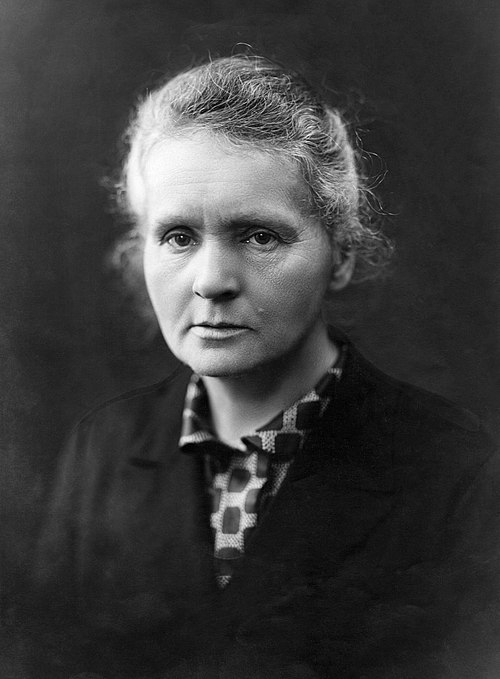
She pioneered research on radioactivity, discovered polonium and radium, and remains the only person to win Nobel Prizes in two different sciences (Physics 1903, Chemistry 1911).

His telescopic discoveries of Jupiter's moons and Venus's phases backed heliocentrism, and his emphasis on experiment earned him the title father of modern science.

His equations unified electricity, magnetism, and light into a single theory of electromagnetism, directly paving the way for relativity and radio.

He discovered electromagnetic induction, the principle behind electric motors and generators, despite having almost no formal mathematical education.

He confirmed germ theory, invented pasteurization, and developed vaccines for rabies and anthrax, saving countless lives.

His alternating-current system and induction motor became the foundation of modern electric power distribution.

His 1913 model of the atom introduced quantized electron orbits and he won the 1922 Nobel Prize, becoming a founding figure of quantum mechanics.

He formalized computation with the Turing machine and helped break the Enigma cipher at Bletchley Park, founding computer science and modern AI.

He created the periodic table in 1869 and correctly predicted the properties of then-undiscovered elements like gallium and germanium.

Her X-ray diffraction Photo 51 was crucial evidence for the double-helix structure of DNA, and she did foundational work on virus structure.

His pea-plant experiments established the laws of inheritance, but the work was ignored for roughly 35 years until rediscovered around 1900.

Her 1843 notes on Babbage's Analytical Engine included what is often called the first published algorithm intended for a machine.

His ammonia synthesis feeds billions via fertilizer, but he also pioneered chemical weapons, personally directing the first large-scale chlorine gas attack in WWI.

His rejection of genetics as pseudoscience, backed by Stalin, wrecked Soviet agriculture and got dissenting biologists imprisoned or executed.

His fraudulent 1998 study falsely linking the MMR vaccine to autism was retracted and cost him his medical license, fueling a global anti-vaccine movement.
◆ Ranked on Tier Deck · browse all 296 lists · Privacy · Terms