
Giant Pacific octopus
The eight-armed genius
The largest octopus species, it can solve mazes, open jars, and use nine brains (one central, one per arm) to problem-solve. Camouflage masters that change color and texture in under a second.
From galaxy-brained cephalopods to reef-wrecking menaces.
The largest octopus species, it can solve mazes, open jars, and use nine brains (one central, one per arm) to problem-solve. Camouflage masters that change color and texture in under a second.

The ocean's top predator, orcas hunt in coordinated pods using culture-specific dialects and techniques, even preying on great white sharks for their livers. No orca has ever killed a human in the wild.
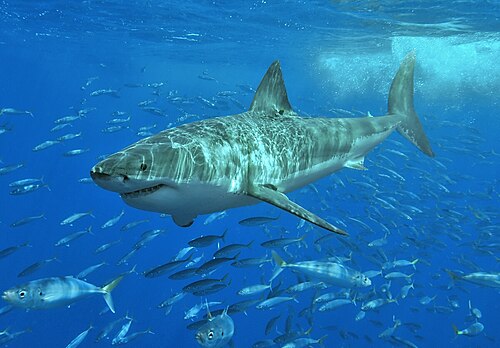
Can detect a single drop of blood in millions of drops of water and sense the electrical fields of prey via the ampullae of Lorenzini. Breaches fully out of the water at up to 25 mph when hunting seals.

One of the few animals to pass the mirror self-recognition test, dolphins use signature whistles as names and hunt cooperatively. Their brains rival primates in relative size.

Uses rocks as tools to crack open shellfish and holds hands while sleeping so it won't drift apart. As a keystone species, it protects kelp forests by eating the sea urchins that would devour them.

With wingspans up to 7 meters, it has the largest brain-to-body ratio of any fish and may recognize itself in mirrors. Completely harmless, it filter-feeds on plankton while gliding gracefully.
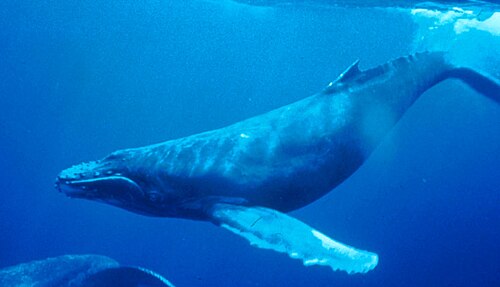
Males sing complex, evolving songs that spread across ocean populations like hit music. Famous for spectacular breaches and bubble-net feeding, a cooperative hunting technique.

A relative of the seahorse whose leaf-shaped appendages make it nearly invisible among kelp. It has no teeth or stomach and males carry the fertilized eggs on their tails.

Lives symbiotically inside stinging sea anemones thanks to a protective mucus coating. Every clownfish is born male and the dominant one changes sex to female when needed.

Migrates thousands of miles and returns to the exact beach where it hatched to lay eggs, navigating by Earth's magnetic field. Can live over 70 years despite crushing odds against hatchlings.

Virtually unchanged for 500 million years, it jets through water using a gas-filled spiral shell that is a natural example of logarithmic proportions. It has around 90 tentacles but no suckers.
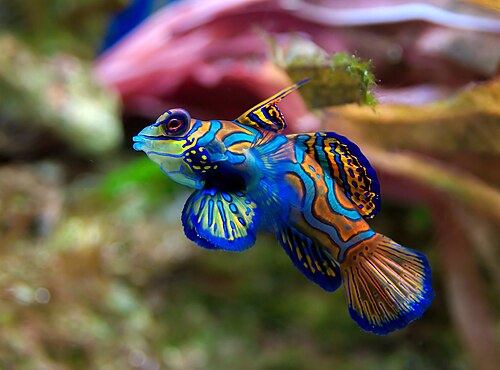
One of only a few animals with true blue pigment cells rather than reflected light. Gorgeous but small and secretive, it coats itself in a foul-smelling, toxic slime instead of scales.
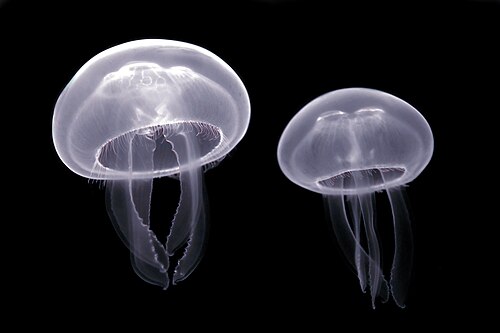
Has no brain, heart, or blood and drifts wherever currents take it, powered by a simple nerve net. Harmless to humans but a reminder that not every ocean icon is a mastermind.

Can live over 100 years and keeps growing throughout life, showing little of the typical decline of aging. Its blood is blue due to copper-based hemocyanin.

Survived four mass extinctions largely unchanged for 450 million years, and its copper-blue blood is harvested to test vaccines for bacterial contamination. Despite the name, it's more closely related to spiders than crabs.

Voted the world's ugliest animal, but its gelatinous droop only appears after decompression from the deep sea; at home under pressure it looks like an ordinary fish. A victim of bad PR.

Produces gallons of choking, fibrous slime in seconds to escape predators and ties itself in knots to clean off. It has no jaws and feeds by burrowing into carcasses.

A jawless parasite with a suction disc of concentric teeth that latches onto fish and rasps out their blood and flesh. As an invasive species it devastated the Great Lakes fisheries.

A venomous starfish that eats living coral, its population outbreaks are a leading cause of coral loss on the Great Barrier Reef. A single one can consume up to 10 square meters of reef per year.

Among the most venomous animals on Earth, its sting can stop a human heart within minutes. It has 24 eyes and actively swims rather than drifting, making it deceptively hard to avoid.
◆ Ranked on Tier Deck · browse all 296 lists · Privacy · Terms