← All tier lists

Spiders, Ranked

Eight legs, eight opinions, one definitive verdict.

Ranked on a mix of biological wow-factor, hunting ingenuity, harmlessness-to-humans, and sheer charisma versus notoriety.
✦ Disagree? Make your own →
S
Peacock spider
Peacock spider
The rainbow disco dancer

Males of the genus Maratus flip up a vividly iridescent abdominal flap and wave their legs in an elaborate courtship dance. At roughly 4 mm long and completely harmless to humans, they are the internet's favorite spider.

Jumping spider
Jumping spider
Big eyes, bigger personality

Salticidae have the sharpest vision of any spider, with two enormous forward-facing eyes, and they pounce on prey rather than using a web. Their curious, cat-like behavior makes them the most beloved spiders.

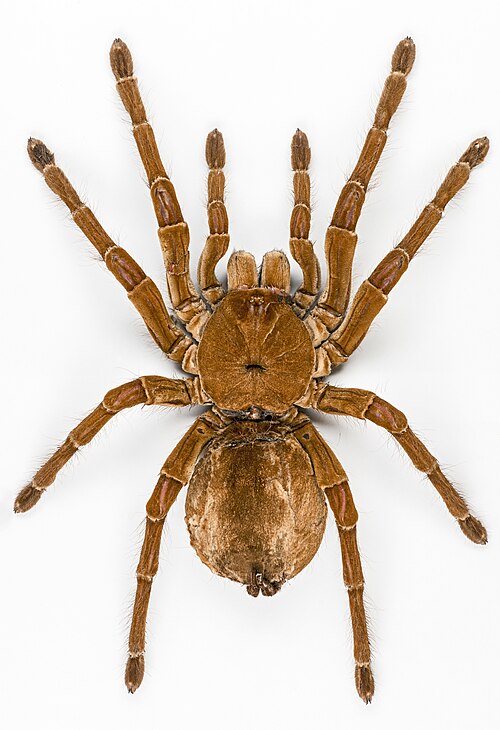
Goliath birdeater
Goliath birdeater
The heavyweight champ

Theraphosa blondi is the largest spider on Earth by mass, weighing up to about 175 g with a leg span near 30 cm. Despite the name it rarely eats birds and its bite is medically minor to humans.

A
Sydney funnel-web spider
Danger with a dress code

Atrax robustus has some of the fastest-acting venom of any spider, yet no deaths have occurred since an effective antivenom was introduced in 1981. Its glossy black body and reared-up fangs make it unforgettable.

Tarantula
Tarantula
The gentle giant

Theraphosidae are large, long-lived and often kept as pets, with females of some species living 20 to 30 years. New World species flick irritating urticating hairs rather than delivering a dangerous bite.

Diving bell spider
Diving bell spider
The only true aquanaut

Argyroneta aquatica is the only spider that spends its entire life underwater, building a silk 'diving bell' filled with air it carries from the surface. Research shows the bell works as a physical gill, drawing dissolved oxygen from the water.

Trapdoor spider
Trapdoor spider
The ambush landlord

These spiders build silk-hinged burrow lids and burst out to seize passing prey. One Australian trapdoor spider named Number 16 lived to about 43 years old, the longest-lived spider on record.

B
Wolf spider
Wolf spider
Devoted single mom

Lycosidae hunt on foot instead of spinning webs and have excellent night vision that reflects in a torch beam. Females carry their egg sac attached to their spinnerets and then ferry the hatched spiderlings on their backs.

Jorō spider
Jorō spider
The golden-web invader

Trichonephila clavata spins large golden-hued orb webs and has spread rapidly across the southeastern United States since it was introduced to Georgia around 2013. It is strikingly colored and, despite its size, essentially harmless to people.

Bolas spider
Bolas spider
The lasso hunter

Instead of a web, Mastophora females swing a sticky silk droplet on a line like a cowboy's bolas to snag moths. They lure the male moths in by chemically mimicking female moth pheromones.

Huntsman spider
Huntsman spider
Big, fast, harmless

Sparassidae are famous for their large leg span and speed, and their flattened bodies let them squeeze under bark and into car sun-visors. They startle people but are not dangerously venomous and help control insects.

C
European garden spider
The reliable orb-weaver

Araneus diadematus is the classic cross-marked orb-weaver seen rebuilding its wheel-shaped web each night in gardens across Europe and introduced North America. Common and useful, but not exactly exotic.

Redback spider
Redback spider
Shy but venomous

Latrodectus hasselti, a close relative of the black widow, carries a potent neurotoxin, but bites are rarely life-threatening and an antivenom has existed since 1956. It usually hides in sheds and mailboxes rather than seeking people out.

Cellar spider
Cellar spider
The daddy-longlegs myth

Pholcidae are the fragile long-legged spiders that dangle in basement corners, and they vibrate their webs into a blur when disturbed. The myth that they have the deadliest venom but fangs too small to bite is simply false.

D
Camel spider
Camel spider
The fraud (not a spider)

Despite viral war-zone photos, Solifugae are a separate arachnid order and are not true spiders at all, nor are they venomous. They earn a low rank for a fearsome reputation built almost entirely on forced-perspective myths.

F
Six-eyed sand spider
Buried and untreatable

These desert-dwelling ambush hunters burrow beneath the sand and possess a cytotoxic venom for which there is no antivenom. Bites are rare, but the combination of potent tissue-destroying venom and no treatment lands it near the bottom.

Brown recluse spider
The flesh-wound reputation

Loxosceles reclusa is one of the few North American spiders whose bite can cause necrotic skin lesions in some cases. Combined with widespread over-diagnosis and public fear, it is the most notorious household spider in the US.

Brazilian wandering spider
Aggressive and armed

Phoneutria are among the most venomous spiders to humans and, unlike most spiders, actively roam the forest floor at night rather than staying in a web. Their defensive, up-reared posture and potent neurotoxin make them genuinely feared.

◆ Ranked on Tier Deck · browse all 296 lists · Privacy · Terms