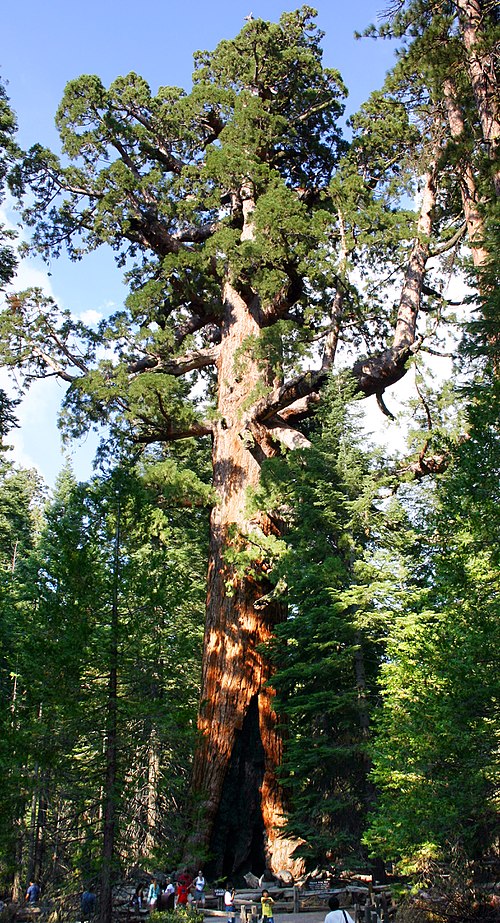
Giant sequoia
The volume champion
General Sherman, a giant sequoia, is the largest known living single-stem tree on Earth by volume at roughly 1,487 cubic meters. They can live over 3,000 years and tolerate fire that kills their competitors.
From record-smashing giants to the tree that can literally kill you.
General Sherman, a giant sequoia, is the largest known living single-stem tree on Earth by volume at roughly 1,487 cubic meters. They can live over 3,000 years and tolerate fire that kills their competitors.

Coast redwoods are the tallest trees on the planet; the specimen named Hyperion measures about 116 meters, far taller than the Statue of Liberty. They pull moisture straight from coastal fog.

Great Basin bristlecone pines are among the oldest non-clonal organisms alive; the tree named Methuselah is roughly 4,850 years old. They survive by growing incredibly slowly in harsh high-altitude soils.
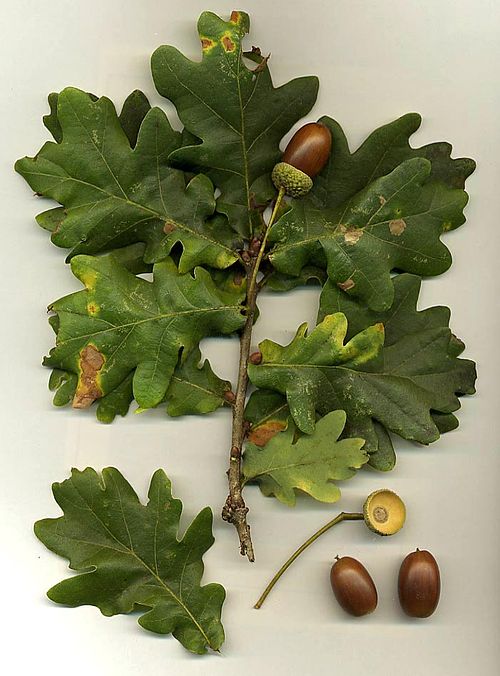
A single mature oak can support hundreds of insect species and vast wildlife, making it a keystone of temperate ecosystems. It is the national tree of the United States, England, Germany, and more.

Ginkgo biloba is the sole surviving species of an ancient plant division that dates back over 200 million years, essentially unchanged. Several ginkgos survived the 1945 Hiroshima blast and still grow today.

Acer palmatum is prized worldwide as an ornamental for its delicate leaves and brilliant crimson-orange fall color. Centuries of cultivation have produced hundreds of named varieties.

Baobabs store thousands of liters of water in their swollen trunks to survive African and Madagascan dry seasons, and can live well over 1,000 years. Their bare, root-like branches earned the 'upside-down tree' nickname.
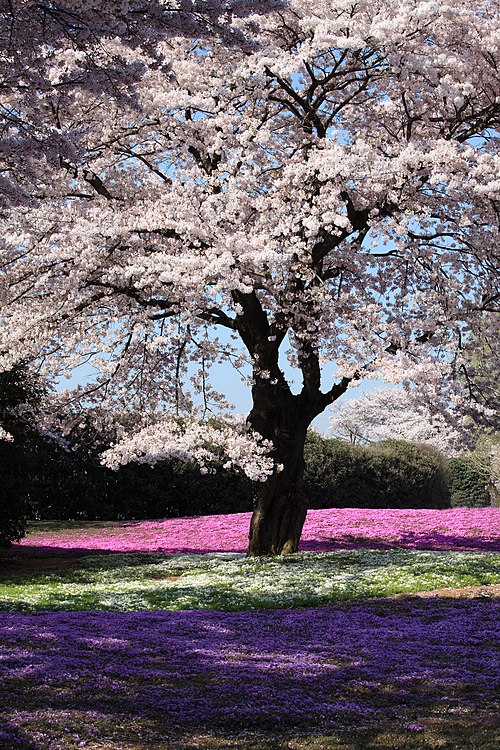
Flowering cherry trees produce the pink sakura displays celebrated in Japan's centuries-old hanami tradition. Washington, D.C.'s famous trees were a 1912 gift from Japan.

Salix babylonica's long, drooping branches make it one of the most recognizable ornamental trees, thriving beside ponds and rivers. Willow bark's salicin is the natural precursor to aspirin.

Birches are hardy pioneer species that quickly colonize disturbed ground and cold northern climates. Their distinctive papery white bark was historically used for canoes and writing.

Douglas firs are among the tallest conifers, with historical specimens documented well over 100 meters, and are a backbone of the North American lumber industry. They are also one of the most popular Christmas tree species.

The coconut palm supplies food, drink, oil, fiber, and building material, earning it the nickname 'tree of life' across the tropics. Its seeds float and can drift across oceans to colonize new shores.

The sugar maple is tapped for the sap that becomes maple syrup, requiring roughly 40 liters of sap per liter of syrup. The maple leaf it helped make famous is Canada's national emblem, featured in stylized form on the flag.

Scots pine has one of the largest natural ranges of any conifer, stretching across Europe and Asia. Reliable and widely planted, it is solid but rarely spectacular.

Eucalyptus grows extremely fast and feeds koalas, but its oil-rich leaves and shedding bark make it dangerously flammable and a driver of intense wildfires outside its native Australia. It is also a thirsty invasive in many regions.

This fast-growing hybrid conifer is planted for quick privacy hedges but rapidly balloons to enormous heights, casting deep shade. In the UK it has triggered thousands of formal high-hedge disputes between neighbors.

The 'Bradford' Callery pear is notorious for spring blossoms that smell foul and for weak crotch angles that cause branches to split in storms. Once a street-tree favorite, it is now banned or restricted in several US states as invasive.

Ailanthus altissima is an aggressive invasive that poisons nearby plants with chemicals, resprouts from any cut root, and smells rank. It is also the preferred host of the destructive spotted lanternfly.

Guinness World Records lists the manchineel as the most dangerous tree on Earth: its milky sap blisters skin, its fruit is poisonous, and even sheltering under it in rain causes burns. Warning signs and painted trunks mark it on Caribbean beaches.
◆ Ranked on Tier Deck · browse all 296 lists · Privacy · Terms